















































Feets Doctor Urgent Care Gameplay Breakdown
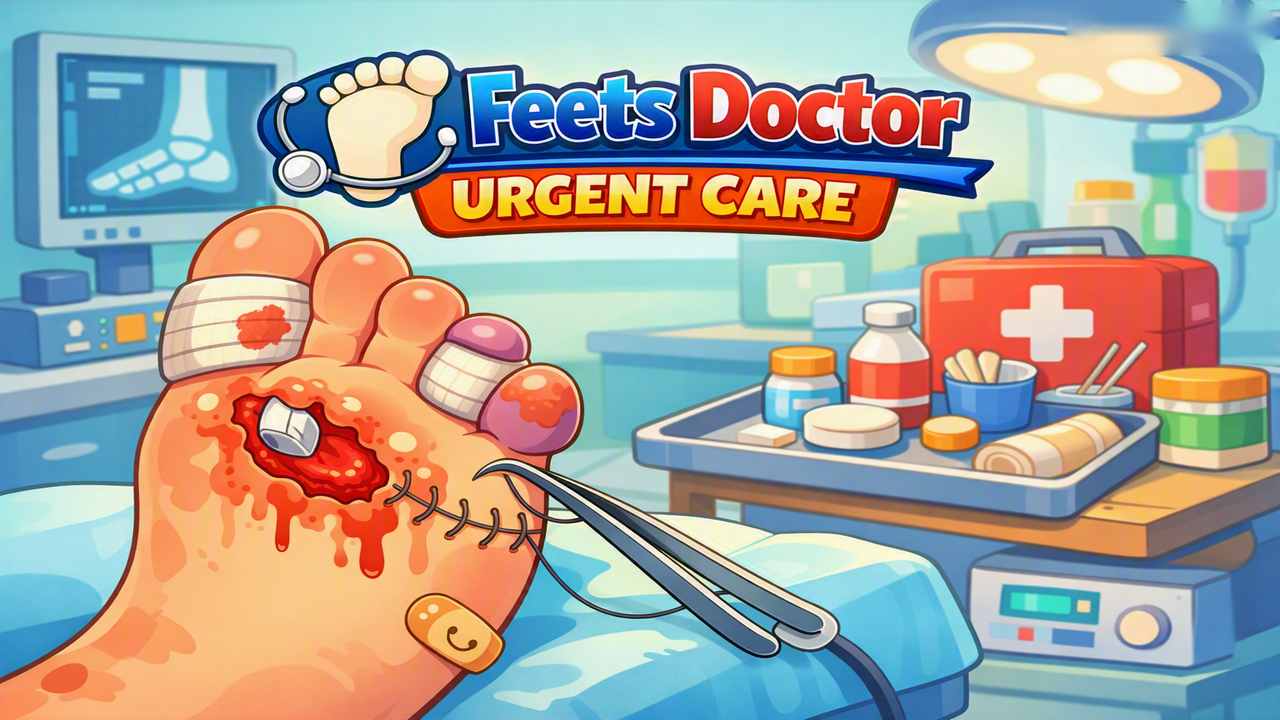
A patient limps in with a sore foot, and that's the entire setup. Feets Doctor Urgent Care keeps things moving through short, repeatable clinic visits rather than a sprawling storyline. Grab a tool, spot the problem, fix it, next patient.
A typical visit unfolds like this:
- The patient points to whatever hurts: a splinter, a bruise, a swollen spot.
- Pick through the instrument tray (tweezers, swabs, ointment, ice packs, a quick X-ray) until the diagnosis clicks.
- Clean and treat the area, then wrap it with a bandage from whatever colors are on offer.
- Patient walks off happy; another one shuffles in.
What Stands Out
- No two patients show up with the same combination of injuries, so the routine never fully repeats.
- The toolkit is surprisingly deep for something this casual: compressors, syringes, scanning gear.
- Visuals lean cartoonish and bright rather than trying for realism.
- Patients never stop coming, so there's no real "finish line" to hit.
FAQs
Do you need any background with medical games to jump in?
Not really; the prompts walk you through it well enough within a round or two.
Does anything carry over between sessions?
Mostly no. Each visit resets on its own rather than building toward some long-term save.
Any purchases involved?
Depends on the version; some carry ads or optional buys, worth a glance at the store page first.
Tips That Actually Help
- Don't bandage early. Sweep the whole foot for marks first; missing one spot just means backtracking later.
- Match tool to injury instead of clicking through them at random: ointment for burns, tweezers for anything sharp lodged in skin.
- Swelling that looks oversized usually hides a fracture underneath; run the X-ray before assuming it's just a bruise.
- Slow down on the bandaging step specifically. Rushed wraps tend to trigger error prompts that cost more time than they save.
Similar Doctor Games Must Try
Final Thoughts
What makes Feets Doctor Urgent Care work isn't complexity; it's the rhythm. Simple tools, varied injuries, quick payoff. That mix is enough to keep the sessions interesting long after the novelty of the first patient wears off.
Discuss Feets Doctor Urgent Care