





































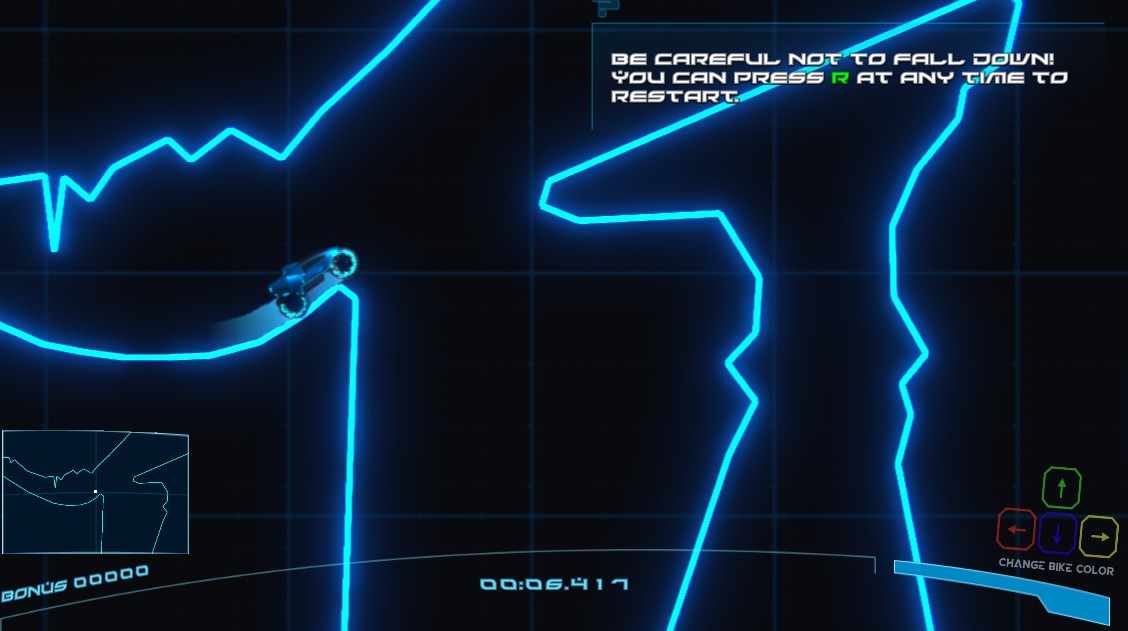
Rider Rush is a fast 2D motorbike platformer built around neon, color-shifting tracks. One wrong move on a loop, a gap, or the wrong colored panel, and the run is over.
Gameplay in Rider Rush
The rider controls three things at once. Speed. Balance. Timing. Miss any one of them and the track punishes it immediately.
A run usually breaks down like this:
- Throttle builds momentum for jumps, loops, and steep climbs
- Mid-air rotation lets the bike flip or simply correct its landing angle
- The bike has to switch colors on the fly to match whatever surface it is about to touch
- A crash, a flip, or landing on the wrong color ends the attempt right there
Full throttle feels good until it does not. Push it too long, and the bike gets twitchy exactly when a mixed-color section shows up, and that is usually where runs fall apart.
Standout Features
What separates Rider Rush from a normal bike game is the color layer sitting on top of the physics. A jump stops being just a jump. It becomes a jump that might land on the wrong panel if the timing is off by half a second.
What Makes It Stand Out
A few things make this game click once you get past the first couple of levels.
- Speed, Angle, and Color all compete for attention at the same moment
- Harder levels come from trickier layouts, not from the game just slowing you down artificially
- Runs are short, so failing rarely feels like a big loss
- Glowing track segments make hazards visible even when things move fast
None of this is complicated on paper. It is the timing that gets people.
Tips for Mastering the Neon Tracks
- Look ahead before flooring it. Riders who commit to full speed before seeing what is coming usually pay for it a second later.
- Ease off the throttle slightly right before a jump instead of holding it until the last frame. It buys a little more control over where the bike actually lands.
- Only attempt flips when the landing zone is obviously clear. A flip without a real target in sight is just a coin toss.
- Repeat tricky color switches on their own until the reaction stops feeling like a decision and just happens. That is usually the difference between clearing a section and not.
- Keep the wheels level with the surface on touchdown. Even a small angle off can be enough to send the bike over.
- When a track throws several colors at you in quick succession, slow down on purpose. Trading a bit of speed for control is almost always worth it there.
- A failed attempt is not really a loss; it is closer to a note on where the timing was off. Most of what looks unfair in Rider Rush turns out to have a pattern once you have run it a few times.
Final Thoughts
The color switching is what makes Rider Rush more than another bike platformer, but it is the small habits- looking ahead, easing off before jumps, staying calm through the messy color sections- that actually get a run to the finish line.
Discuss Rider Rush